
How to Spot Fake News and Fake Social Media Accounts
Social media has become one of the primary sources of news and information for millions of people. Platforms like Facebook, Instagram, X (formerly Twitter), WhatsApp, YouTube, and LinkedIn allow users to consume and share content instantly. While this makes information more accessible, it also creates opportunities for fake news and fake social media accounts to spread misinformation quickly.
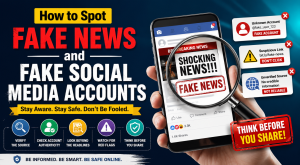
Fake news can influence public opinion, create unnecessary panic, damage reputations, and even lead to financial scams. Similarly, fake social media accounts are often used to impersonate individuals, brands, celebrities, or organizations to trick users into sharing personal information or sending money.
The good news is that you don’t need to be a cybersecurity expert to identify suspicious content. By following a few simple practices, you can protect yourself and help stop the spread of misinformation. In this guide, we’ll explain how to identify fake news and fake social media accounts before they cause harm.
1. Verify the Source Before Believing or Sharing
The first and most important rule is to verify the source of any information before you believe it or share it with others. Many fake stories appear convincing because they use attractive headlines, edited images, or copied logos from trusted organizations.
Always check where the information originally came from. If the article is published by an unknown website with no contact details or author information, it deserves extra scrutiny. Trusted news organizations follow editorial standards and usually provide clear information about their journalists and sources.
If you receive news through WhatsApp or another messaging app, don’t assume it is true simply because a friend or family member forwarded it. Many false messages circulate for months or even years before resurfacing.
You can also search the headline on Google to see whether multiple trusted news organizations have reported the same story. If only one unknown website is reporting a sensational claim, there’s a good chance it isn’t accurate.
Before sharing any breaking news, take a minute to verify it from reliable sources. This small habit can prevent the spread of misinformation.
2. Look for Signs of Fake Social Media Profiles
Fake social media accounts are becoming increasingly sophisticated. Some are created to scam users, while others spread spam, misinformation, or phishing links. Learning to recognize these profiles can help you avoid becoming a victim.
Start by checking the account’s profile information. Fake accounts often have incomplete bios, recently created profiles, very few original posts, and an unusually high number of accounts they follow compared to their followers.
Look closely at the profile picture as well. Scammers frequently steal images from other people or use AI-generated photos. If every picture looks professionally edited but the account has little real activity, be cautious.
Pay attention to how the account communicates. Fake profiles often send unsolicited direct messages asking for personal information, investment opportunities, cryptocurrency payments, gift cards, or urgent financial help.
If someone claims to represent a well-known company, celebrity, or government organization, verify whether the account has an official verification badge or is linked from the organization’s official website.
Whenever you receive a suspicious message, avoid clicking on links or downloading attachments until you’ve confirmed the account is genuine.
3. Check Images and Videos Carefully
Images and videos can be extremely convincing, but they don’t always tell the complete story. In many cases, scammers reuse old photos or videos and present them as recent events to mislead people.
A dramatic image shared during a natural disaster may actually be several years old or taken in another country. Similarly, short video clips can be edited to remove important context, making viewers believe something completely different happened.
Before trusting visual content, look for signs of editing, unusual shadows, blurry text, or mismatched backgrounds. These may indicate that the image has been manipulated.
You can also perform a reverse image search using popular search engines to see where the image first appeared online. This simple technique often reveals whether a picture is old, taken from another event, or completely unrelated to the claim being made.
Videos should also be viewed critically. Watch the entire clip instead of relying on a short edited segment. Many misleading videos go viral because only a small portion of the original footage is shared.
Taking a few extra minutes to verify visual content can prevent you from believing or sharing false information.
4. Avoid Emotional Headlines and Clickbait
One of the easiest ways to recognize fake news is by examining the headline. Fake news creators often use sensational language designed to provoke strong emotions such as fear, anger, excitement, or curiosity.
Headlines like “You Won’t Believe What Happened!”, “Government Issues Urgent Warning!”, or “Share This Before It’s Deleted!” are common examples of clickbait. Their goal is to encourage users to click and share before thinking critically.
Legitimate news organizations usually write informative headlines that summarize the story rather than exaggerate it. If a headline seems too shocking or unbelievable, it’s worth investigating further before accepting it as true.
Another warning sign is content that pressures readers to share immediately without verification. Messages saying “Forward this to everyone you know” or “Don’t let the media hide this” are often associated with misinformation campaigns.
Instead of reacting emotionally, read the entire article carefully. Check whether it includes credible sources, official statements, supporting evidence, or expert opinions. If these elements are missing, the information may not be trustworthy.
Developing the habit of reading beyond the headline can significantly reduce the chances of falling for fake news.
5. Report Fake Content and Help Protect Others
Identifying fake news is only part of the solution. Reporting misleading content helps social media platforms reduce the spread of misinformation and protect other users.
Most major social media platforms allow users to report fake accounts, spam messages, impersonation attempts, and misleading posts. When enough users report suspicious content, platforms can review it and take appropriate action.
If someone is pretending to be you or impersonating a business you know, report the account immediately. Identity theft can damage reputations and may also be used to scam innocent people.
You should also educate friends and family about online safety. Many scams succeed because people are unaware of common warning signs. Sharing digital safety tips can help create a more informed online community.
However, avoid arguing with fake accounts or spreading their content further by repeatedly sharing it. Instead, report the content through the platform’s reporting tools and move on.
Every responsible user plays a role in making social media a safer place for everyone.
Conclusion
Fake news and fake social media accounts have become a growing challenge in today’s digital world. While technology has made it easier to communicate and access information, it has also made it easier for scammers and misinformation campaigns to reach millions of people within minutes.
Fortunately, protecting yourself doesn’t require advanced technical knowledge. By verifying sources, examining social media profiles carefully, checking images and videos, avoiding clickbait headlines, and reporting suspicious content, you can greatly reduce the risk of being misled.
Remember that every time you verify information before sharing it, you contribute to a healthier and more trustworthy online environment. Responsible social media use benefits not only you but also your family, friends, and the wider community.
The next time you come across a viral post or receive a sensational message, pause for a moment and verify the facts. A few minutes of careful checking can prevent the spread of misinformation and help keep the internet a safer place for everyone.