
10 Social Media Mistakes That Are Hurting Your Growth
Social media has become one of the most powerful platforms for individuals, businesses, and content creators to connect with people worldwide. Whether you are trying to grow a personal brand, promote your business, or become an influencer, platforms like Facebook, Instagram, LinkedIn, X (formerly Twitter), and YouTube offer endless opportunities. However, many people struggle to grow despite posting regularly. They often blame the algorithm, increasing competition, or bad luck, when the real problem lies in their strategy.
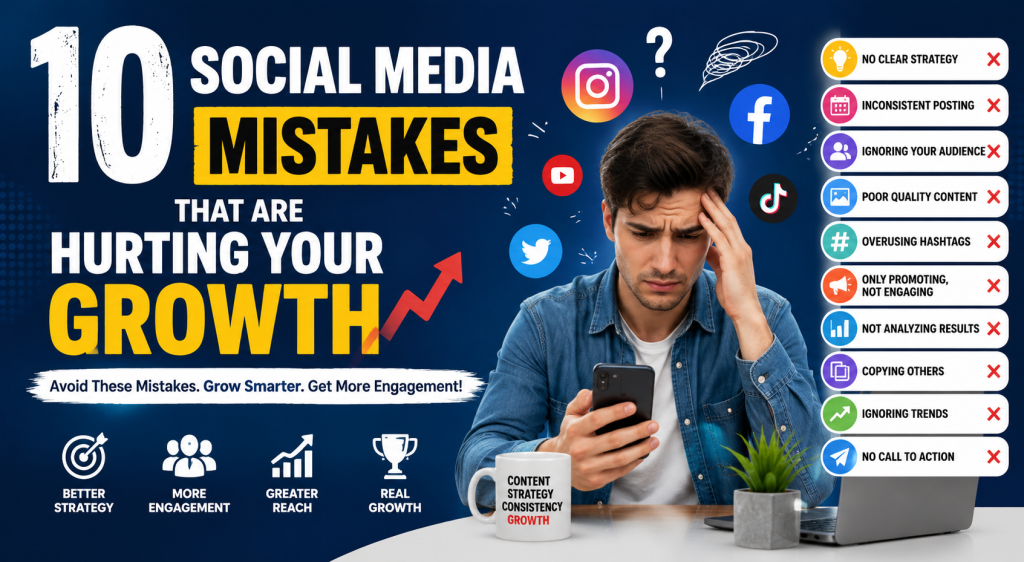
Growing on social media is not just about posting beautiful images or uploading videos every day. Success depends on understanding your audience, creating valuable content, engaging with followers, and continuously improving your approach. Even small mistakes can reduce your reach, engagement, and follower growth over time.
In this article, we’ll discuss ten common social media mistakes that prevent accounts from growing and explain how you can avoid them to build a stronger online presence.
1. Posting Without a Content Strategy
One of the biggest mistakes people make is posting content without any clear plan. Many creators wake up each day wondering what they should post, resulting in inconsistent and random content that doesn’t provide value to their audience.
A content strategy helps you stay focused on your goals. Before creating content, ask yourself:
- Who is my target audience?
- What problems can I solve for them?
- What type of content do they enjoy?
- What action do I want them to take?
For example, if you run a fitness page, your content can include workout tips, healthy recipes, client success stories, exercise tutorials, and motivational posts. Every piece of content should support your overall objective.
Planning your posts weekly or monthly also saves time and ensures consistency. Using a content calendar helps you maintain a healthy mix of educational, entertaining, promotional, and engaging content instead of posting randomly.
2. Ignoring Audience Engagement
Many users believe social media is all about posting content. In reality, social media is about building relationships. If someone comments on your post or sends you a message, they expect a response.
Ignoring comments and messages sends a signal that you don’t value your audience. People are more likely to follow creators who actively communicate with their community.
Engagement includes:
- Replying to comments
- Answering direct messages
- Liking comments from followers
- Asking questions in captions
- Creating polls and quizzes
- Responding to story replies
Social media platforms also reward engagement. When users interact with your content, algorithms recognize that your posts are valuable and show them to more people.
Even spending 20 to 30 minutes daily interacting with your audience can significantly improve your account’s growth over time.
3. Using Too Many or Irrelevant Hashtags
Hashtags help categorize content and improve discoverability, but many users either overuse them or choose hashtags that have nothing to do with their content.
For example, using trending hashtags simply because they are popular can confuse algorithms and attract the wrong audience. Similarly, stuffing dozens of hashtags into every post may look spammy and reduce credibility.
Instead, focus on relevant hashtags that match your content and audience. A balanced approach is often more effective than using the maximum number of hashtags allowed.
A good hashtag strategy includes:
- Industry-specific hashtags
- Niche hashtags
- Location-based hashtags (for local businesses)
- Brand-specific hashtags
- Community hashtags
Review your hashtag performance regularly and update your list based on what generates the best engagement.
4. Inconsistent Posting Schedule
Consistency is one of the most important factors for long-term social media success. Many creators post daily for a week and then disappear for several weeks before returning with another burst of activity.
This inconsistency makes it difficult for followers to stay engaged and prevents algorithms from recognizing your account as active.
You don’t need to post multiple times every day. Instead, choose a schedule that you can maintain consistently.
For example:
- Instagram: 3–5 posts per week
- LinkedIn: 2–4 posts per week
- Facebook: 3–5 posts per week
- YouTube: 1–2 videos per week
Using scheduling tools can help you prepare content in advance and publish it automatically.
Remember that quality is always more important than quantity. A consistent posting schedule with valuable content performs much better than frequent low-quality posts.
5. Not Tracking Analytics
Many creators never look at their analytics dashboard. They continue posting the same type of content without knowing what’s actually working.
Analytics provide valuable insights, including:
- Reach
- Impressions
- Engagement rate
- Watch time
- Follower growth
- Profile visits
- Website clicks
By studying these metrics, you can identify which content your audience enjoys the most.
For example, you may discover that educational carousel posts receive twice the engagement of simple images or that short videos generate more profile visits than text posts.
Regularly reviewing analytics helps you make informed decisions instead of relying on guesswork.
A simple monthly review can reveal trends that significantly improve your content strategy.
6. Focusing Only on Selling
Many businesses treat social media like an online billboard by constantly promoting products and services. While promotions are necessary, excessive selling often pushes followers away.
People follow brands because they want useful information, entertainment, inspiration, or solutions—not endless advertisements.
A balanced content strategy might include:
- Educational content
- Behind-the-scenes updates
- Customer success stories
- Industry tips
- Product demonstrations
- Promotional offers
Following the 80/20 rule is often effective: provide value in about 80% of your content and reserve around 20% for promotional posts.
When your audience trusts your expertise, they are much more likely to become customers.
7. Copying Competitors Instead of Creating Original Content
It’s perfectly acceptable to learn from successful creators, but copying their content word for word rarely leads to long-term growth.
Every audience is different, and originality helps build a recognizable brand.
Instead of copying, observe:
- Content formats
- Posting frequency
- Storytelling techniques
- Video styles
- Engagement strategies
Then adapt those ideas using your own experiences, knowledge, and personality.
Authentic content builds stronger connections and encourages people to follow you for your unique perspective.
8. Ignoring Video Content
Short-form video has become one of the fastest-growing content formats across almost every social media platform.
Reels, Shorts, and short videos often receive more organic reach than static images because they keep users engaged for longer periods.
You don’t need expensive equipment to create effective videos. A smartphone, good lighting, and clear audio are often enough.
Consider creating videos such as:
- Quick tutorials
- Product demonstrations
- Frequently asked questions
- Tips and tricks
- Customer testimonials
- Behind-the-scenes content
Adding video to your content mix can significantly increase visibility and engagement.
9. Buying Fake Followers
Buying followers may make your account appear popular, but it creates serious long-term problems.
Fake followers don’t engage with your content, purchase your products, or recommend your brand. As a result, your engagement rate drops dramatically.
Social media algorithms notice this lack of interaction and may reduce your organic reach.
Brands also examine engagement rates before collaborating with influencers. A large follower count with very little interaction often raises concerns.
Growing naturally may take longer, but it builds a genuine community that supports your content and business.
10. Giving Up Too Early
Perhaps the biggest mistake of all is expecting instant success.
Many creators quit after posting for a few weeks because they don’t see rapid growth. However, building a successful social media presence usually takes months of consistent effort.
Algorithms need time to understand your content and audience. As you continue publishing valuable posts, engaging with followers, and improving your strategy, your results gradually improve.
Successful creators often spend months—or even years—building their audience before achieving significant growth.
The key is consistency, patience, and continuous learning.
Conclusion
Growing on social media is not about finding secret hacks or chasing every new trend. It’s about avoiding common mistakes and consistently providing value to your audience. By creating a clear content strategy, engaging with your followers, using relevant hashtags, posting consistently, analyzing your performance, and focusing on authentic relationships, you can build a strong and sustainable online presence.
Remember that social media success doesn’t happen overnight. Every successful creator started with zero followers and improved through continuous learning and persistence. Instead of comparing yourself to others, focus on improving your content one post at a time. Small improvements made consistently will lead to significant growth over the long term.